
PIXEL IMMERSIVE GALLERY

MOTION ART: MIKEY RICHARDSON
Pixel leaned into digital culture before it was mainstream — mixing code, projection, sound and public interaction.
Our mantra was simple: everyone. touch. Pixel Gallery was built on the idea that art should feel alive — not precious, not locked behind white walls or velvet ropes, and definitely not passive. It leaned into digital culture before it was mainstream, mixing code, projection, sound and public interaction into work that people could actually step into and shape themselves.
Pixel was a bridge for digital culture and contemporary art discourse. Artists, designers and technologists collided, collaborated and experimented, and the lines between disciplines didn’t really matter. It fundamentally shaped how I see both the human experience and the role brands could play within it. It wasn’t just about digital installations or interactive tech — it was about creating environments and narratives where people could interact with art and feel something together.

What always stood out about Pixel wasn’t just the work — it was the people it pulled in.
Sometimes people going through physical rehab or tough moments in life would tell us that interacting or watching others interact with the installations eased their pain for one brief moment and genuinely made them feel happy.
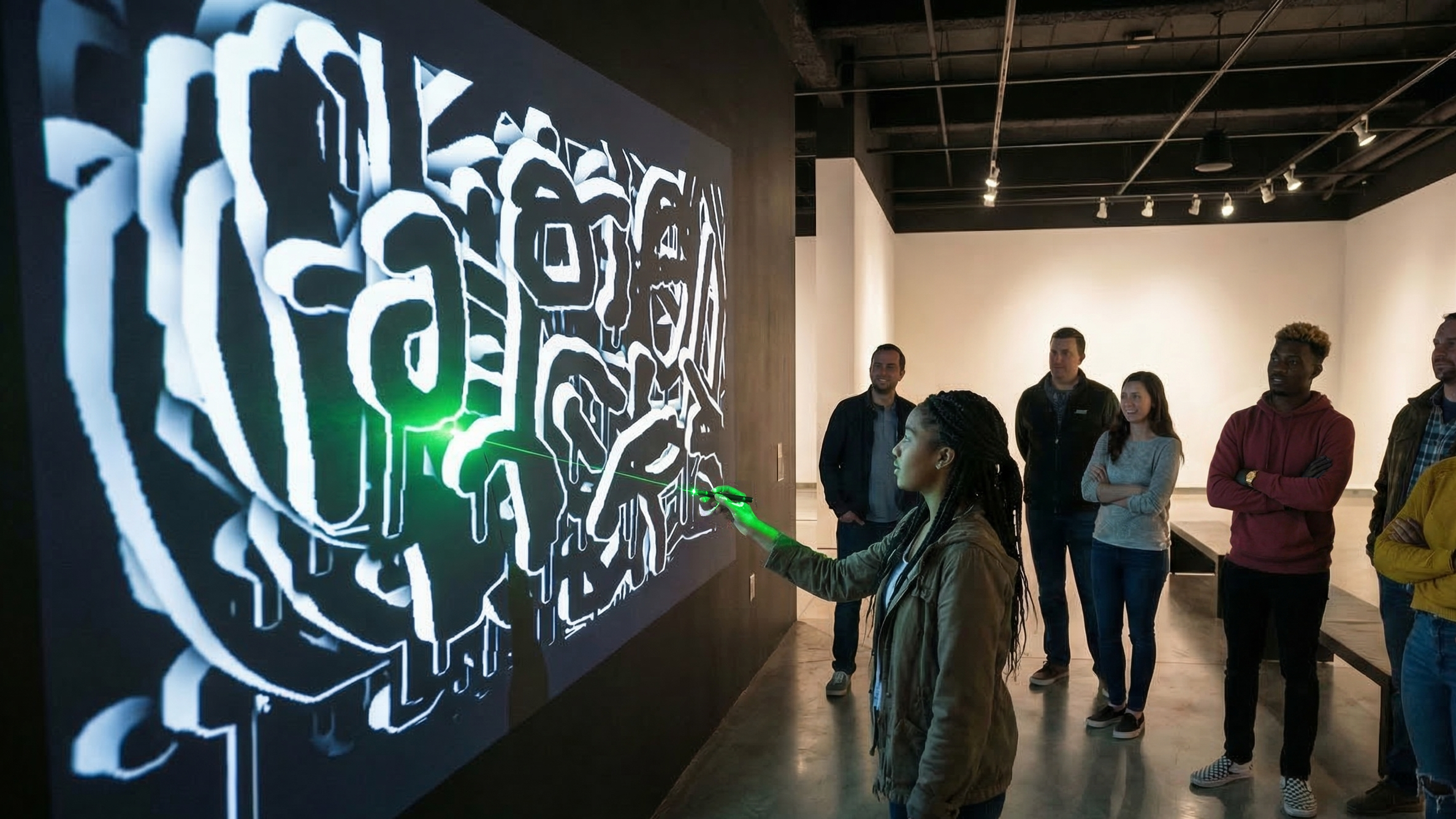
When you watch awestruck strangers playing with art on a massive LED canvas, painting with lasers on tall buildings or see someone visibly decompress inside a responsive rain installation, you realize immersion isn’t spectacle — it’s empathy made tangible.
FLUXe — Scotiabank Nuit Blanche, Scotiabank Courtyard, Toronto
For one night during Scotiabank Nuit Blanche, the courtyard of the Scotiabank Tower became a 100-foot digital canvas where strangers came together to fingerpaint with custom digital artwork from 10 world renowned artists.
Using tablets connected to the LED screen, two participants at a time could choose from ten artists across different disciplines, each bringing their own custom visuals and sound. As people painted, their gestures exploded and evolved across the massive screen — colors, forms, and audio blending together in real time with the artists narratives coming through.
What started as individual play quickly turned into a crowd-built artwork, thousands of strangers layering digital artwork together and creating something spontaneous, chaotic, and uniquely theirs for one night only.
Artists
Eduardo Recife (illustrator), BRZ - Lorenzo Petrantoni (Illustrator), ITL - Zena Holloway (underwater photographer), UK - Eepmon (illustrator), CAN - Nanamy Cowdroy (digital / Paint), AUS - Sectr (graffiti artist), CAN - Hugh Elliot (illustration / Haiku) , CAN - Janice Kun (illustration / paint), CAN - Graham Miller (sound), CAN - Rob King (Creative Technologist), CAN
Curator
Steve Di Lorenzo, Pixel, CAN

Radomly In It’s Place
The Hospital for Sick Children, Toronto
Created for the Larissa Atrens-Mikan Critical Care Waiting Room, this immersive installation was designed for families living through some of the longest hours imaginable — waiting for their children to come out of critical post-operative care.
Working with illustrator Alex Kurina, and creative technologist David Bouchard the piece transforms the room into a quiet, living landscape. Soft hills and tall grasses drift slowly across a panoramic digital canvas, creating a space that feels open, calm, and gently removed from the intensity of the hospital beyond the doors.
As people move through the room, subtle moments of life appear, butterflies lifting from the grass, faint star-like tracers gliding across the sky — small interactions that reward curiosity without demanding attention. The scene itself breathes with time, a sun and moon cycle tied to a 24-hour clock shifts the light across the landscape, carrying the room from morning to dusk to night.
The result is not spectacle, but presence. A quiet place to sit, breathe, and wait, where motion, light, and nature offer small moments of calm during an otherwise uncertain time.
Illustration: Alex Kurina
Creative Technologist: David Bouchard
Design and Build: Allen Chan — Tom Kuo, Foundation
Curator: Steve Di Lorenzo, David Girolami, Pixel
The Touch Show — Pixel Gallery, Kensington Market
The Touch Show was the opening statement for Pixel Gallery’s first space in Kensington Market — a show built to shake the dust off the traditional gallery model and invite people to actually touch the work.
The idea was simple: break down the velvet-rope energy of modern art spaces and replace it with something more alive — art, tech, and storytelling colliding in ways that felt playful, collaborative, and a little bit magical.
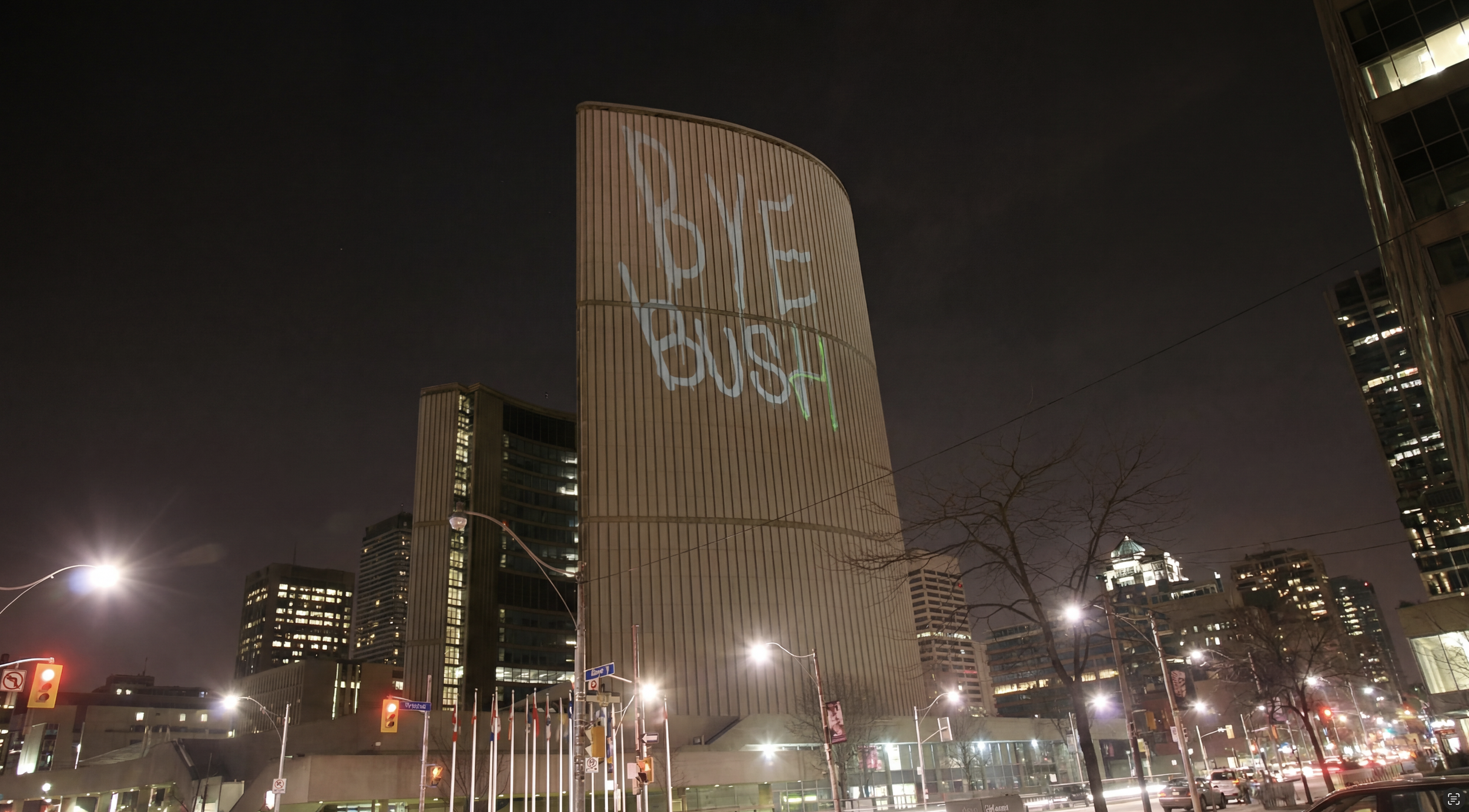
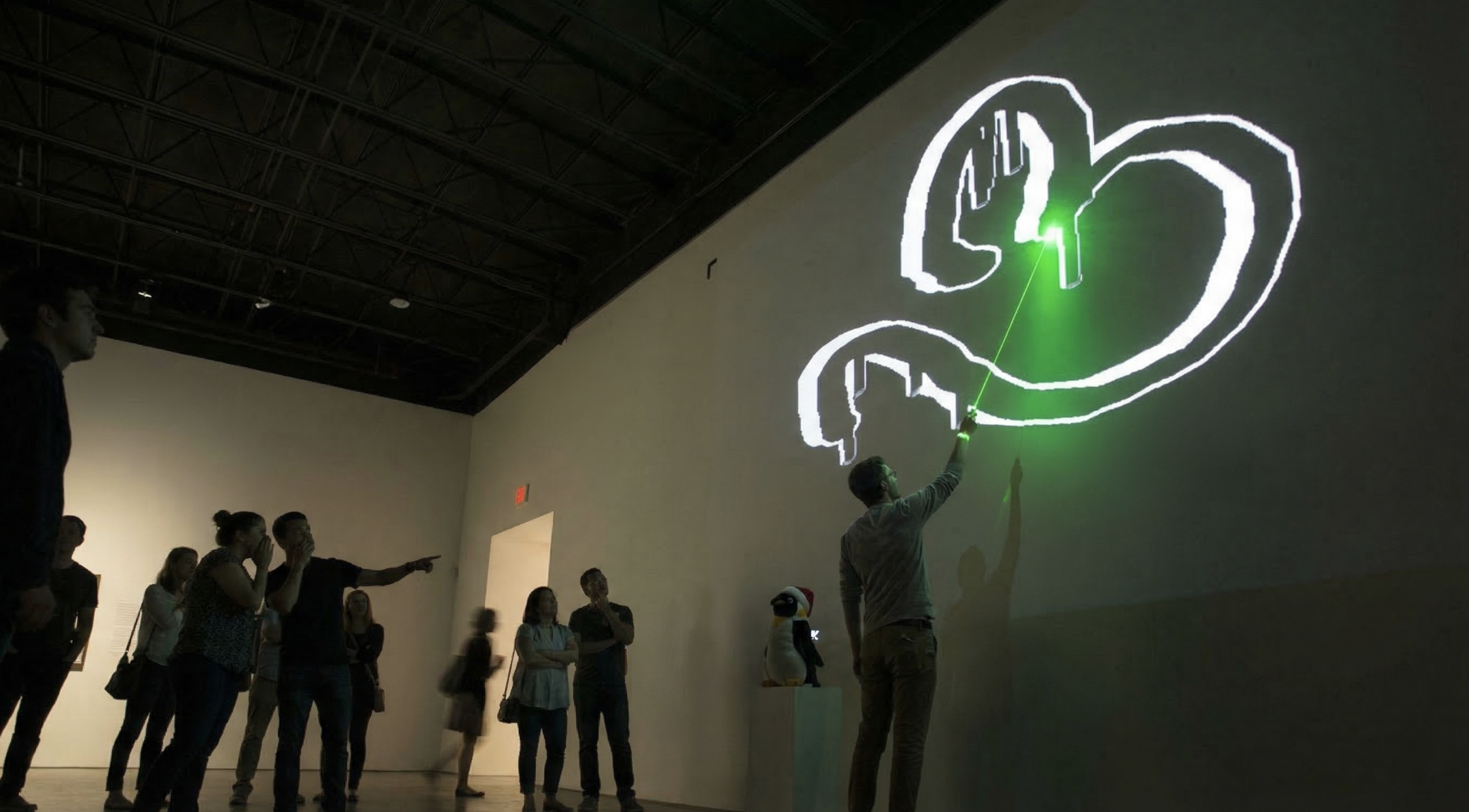
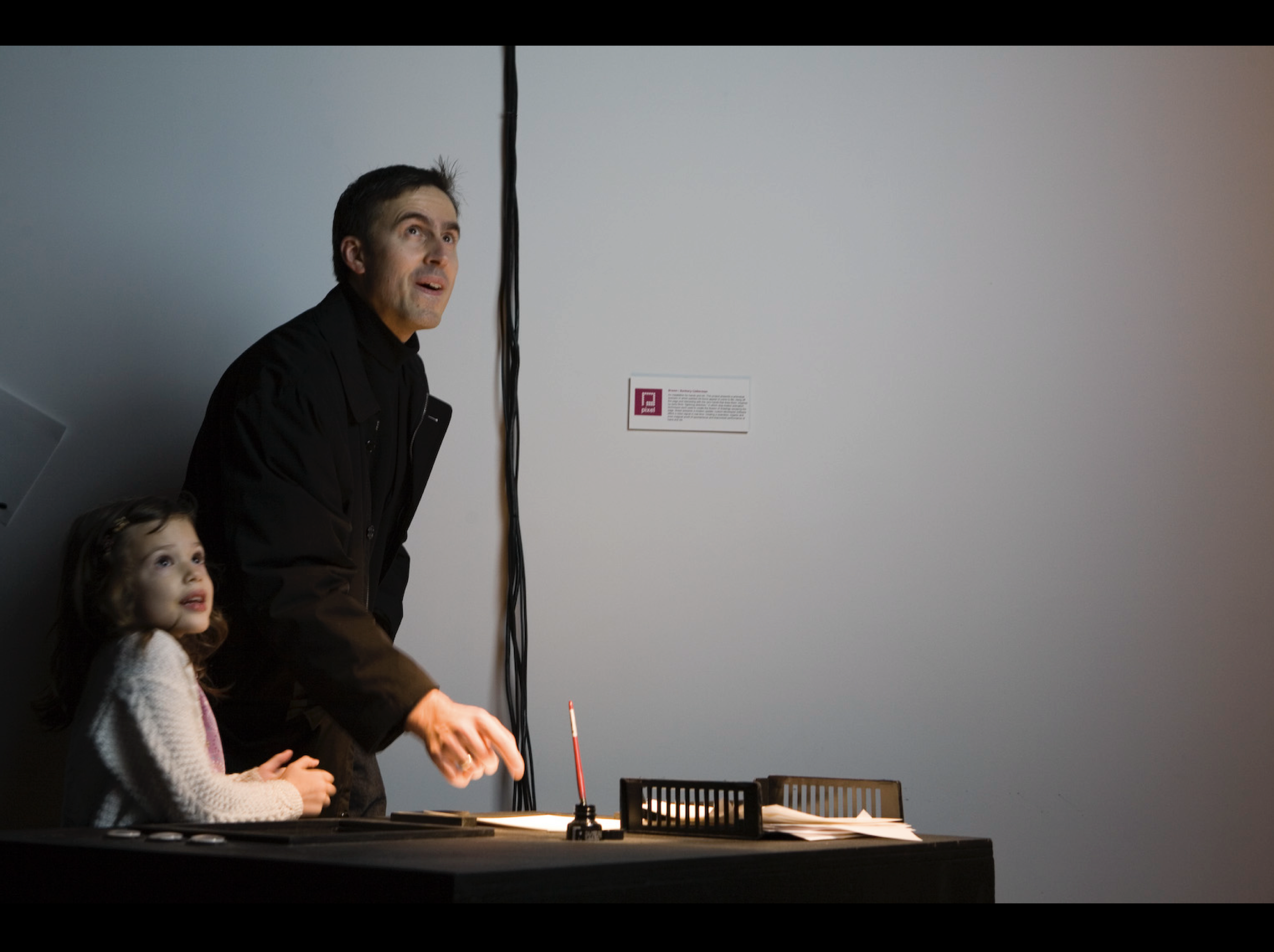
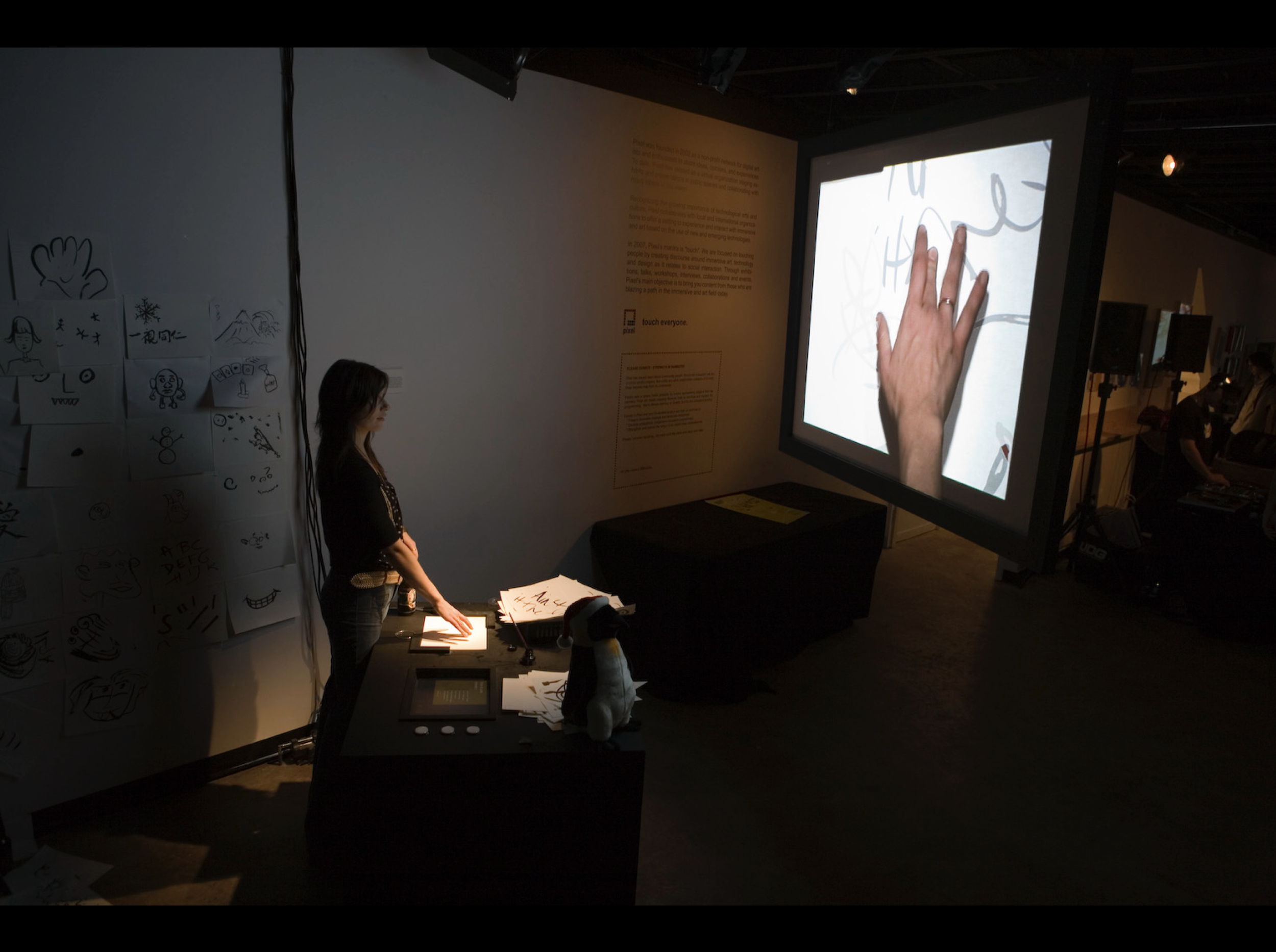
The show was anchored by Zachary Lieberman’s Drawn installation, alongside the legendary Graffiti Research Lab and their Laser Tag project, where we turned the city itself into a canvas, digitally tagging landmarks like the CN Tower and Toronto City Hall with massive projected graffiti.
The Touch show was an open playground, where the crowd, the tech, and the city all became part of the art.
Artists
Zachary Lieberman, USA — Even Roth (The Graffeti Research Lab),USA Andeas Muller, Nanika, UK — Chris Sugrue, USA —Greg Hermanovic, CAN — Craig Swan, CAN — Mikey Richardson, CAD
Curator
Steve Di Lorenzo, David Girolami, Pixel,CAN
Zachary Lieberman, Drawn, Pixel Gallery
The Graffiti Research Lab, Laser Tag
-
![]()
Laser Tag, G.R.L. City Hall
-
![]()
Laser Tag, Pixel Gallery
-
![]()
Laser Tag, G.R.L. CN Tower
-
![]()
Laser Tag, Pixel Gallery
-
![]()
Open Mouth Syndrome, Drawn, Zachary Lieberman, Pixel
-
![]()
Drawn, Zachary Lieberman, Pixel

Something I learned,
people crave participation,
so give them something to step into.
As creative director and curator, Pixel taught me that people crave participation, not just observation. We’re wired for story, for shared moments, for experiences that respond to us. That insight has carried into every agency and client relationship I’ve had since. I don’t see brand building as messaging, I see it as world-building. The strongest brands don’t talk at people — they invite them in. They create spaces, physical or digital, where audiences can see themselves reflected and feel emotionally invested.
{
}
Over the years I’ve been lucky to collaborate with some incredible minds — people like John Maeda, USA — Joseph Kosinski, USA —(director of Tron: Legacy and Oblivion), GMUNK, USA—(Tron: Oblivion), Eduardo Recife, BRZ— MK12, USA — Matt Owens, USA — Zach Lieberman from YesYesNo, USA —Andreas Muller, UK(Nanika) — Tali Krakowsky, UK (Imaginary Forces) — Amoeba Corp, CAN ( Mikey Richardson, Mike Keller and Neil Collier) — Tronic, UK— Lorenzo Petrantonio, ITL— Niko Stumpo, ITL— Zena Holloway, UK— Janice Kun, CAN— Derrik Hodgson, CAN— Eeepmon, CAN — SECTR, CAN— Hugh Elliot , CAN - Derivative, CAN—Tom Kuo, CAN - Bram Timmer, CAN— and Evan Roth — USA from the Graffiti Research Lab, USA — plus a lot of other wildly talented creators pushing the edges of art and technology.